

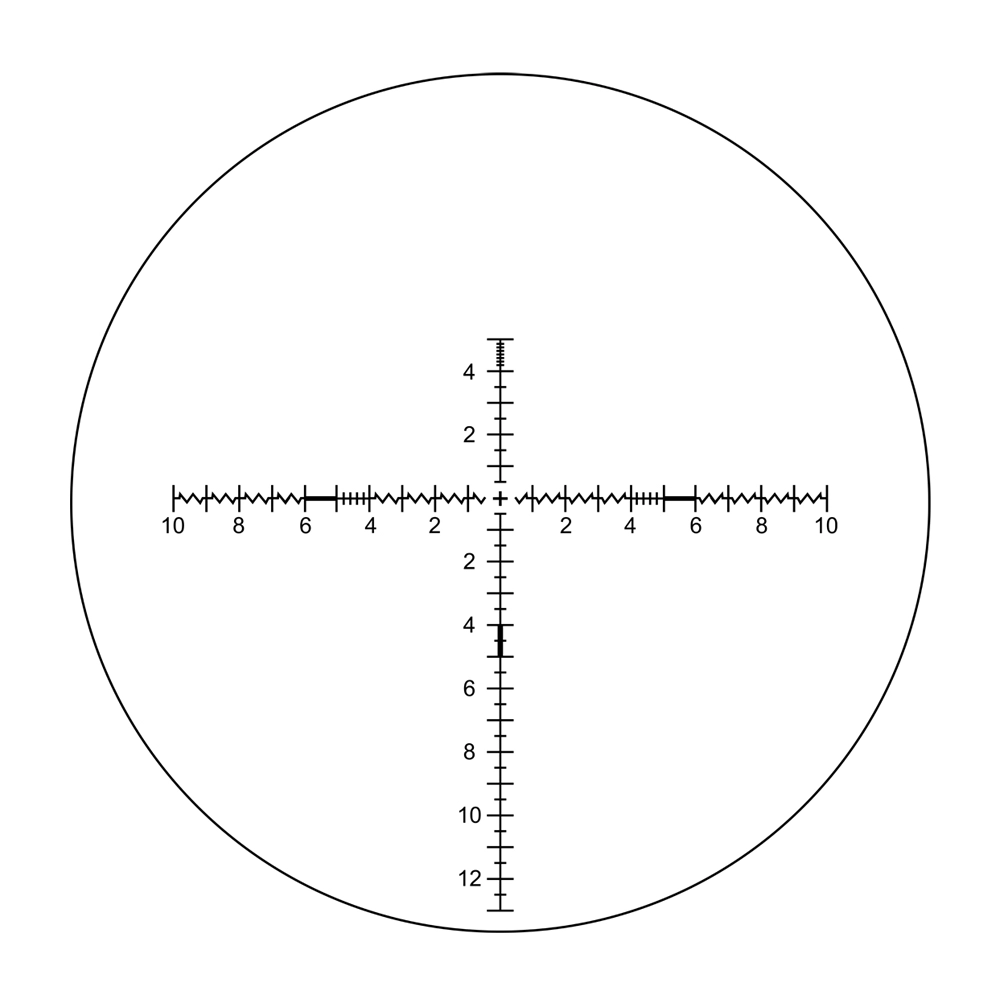

When building a rifle scope line for hunting or tactical use, the reticle is not just a graphic — it defines how the shooter interacts with the optic. A well-designed reticle improves speed, precision, and brand identity.
At Nexroa Optics, custom reticle development follows a structured but practical process, ensuring both optical accuracy and manufacturing reliability.
1. Requirement Discussion
We begin by understanding the application:
- Hunting or tactical
- MOA or MRAD system
- Typical engagement distance
- Illumination requirements
- Target market preference
Many distributors already have a draft concept. If not, our engineering team can provide reference layouts based on proven ballistic logic.
2. Reticle Structure & Optical Matching
The reticle design must match:
- FFP or SFP platform
- Magnification range
- Field of view
- Glass focal positioning
This stage determines subtension accuracy and visual clarity. For SFP scopes, we define the calibration magnification. For FFP scopes, we calculate proportional scaling across the zoom range.
3. Precision Engineering Drawing
After confirming layout details, we generate:
- Vector-based engineering drawings
- Exact MOA/MRAD spacing values
- Line thickness tolerance
- Illumination segmentation (if applicable)
Every dimension is calculated to maintain true ballistic consistency.
4. Reticle Production
Most modern rifle scopes use:
- Glass-etched reticles
- Laser micro-engraving technology
Compared to wire reticles, etched reticles offer higher durability and better shock resistance, especially for scopes tested up to 1000G recoil simulation.
5. Optical Verification & Testing
Before mass production, we perform:
- Subtension accuracy verification
- Optical centering inspection
- Illumination uniformity testing
- Shock and recoil simulation
Only after passing optical validation does the reticle enter full assembly.

6. Final Assembly & Quality Control
Reticle alignment is one of the most critical steps in scope production. Each unit undergoes:
- Alignment calibration
- Tracking test
- Final visual inspection
Consistent reticle positioning ensures repeatable accuracy in the field.
Custom reticle development is a balance between optical physics, shooting practicality, and manufacturing precision.
For brands looking to develop private-label rifle scopes, a properly engineered reticle design is the foundation of long-term product success.
For long-term partners and structured OEM projects, reticle development can be integrated as part of the overall cooperation framework.
Depending on project scope and annual volume, engineering support and custom reticle design services may be included without additional development charges.
We believe sustainable partnerships are built on mutual growth rather than one-time transactions.