The core technology of reticles lies in its ability to quickly align the aiming point with a target while withstanding the recoil of a firearm. Additionally, it must be easy to recognize under different lighting conditions and backgrounds, while minimizing target obstruction. Achieving this balance is challenging, which is why reticle technology has been cornerstone of Nexroa Optics rifle scope manufacturing processes. For over 30 years, we have continuously learned and progressed, striving to keep up with international leading technologies while also developing our own innovations.
1. Wire Reticle Era: International: 1970s – Pre-1995 | Nexroa Optics: Pre-1995
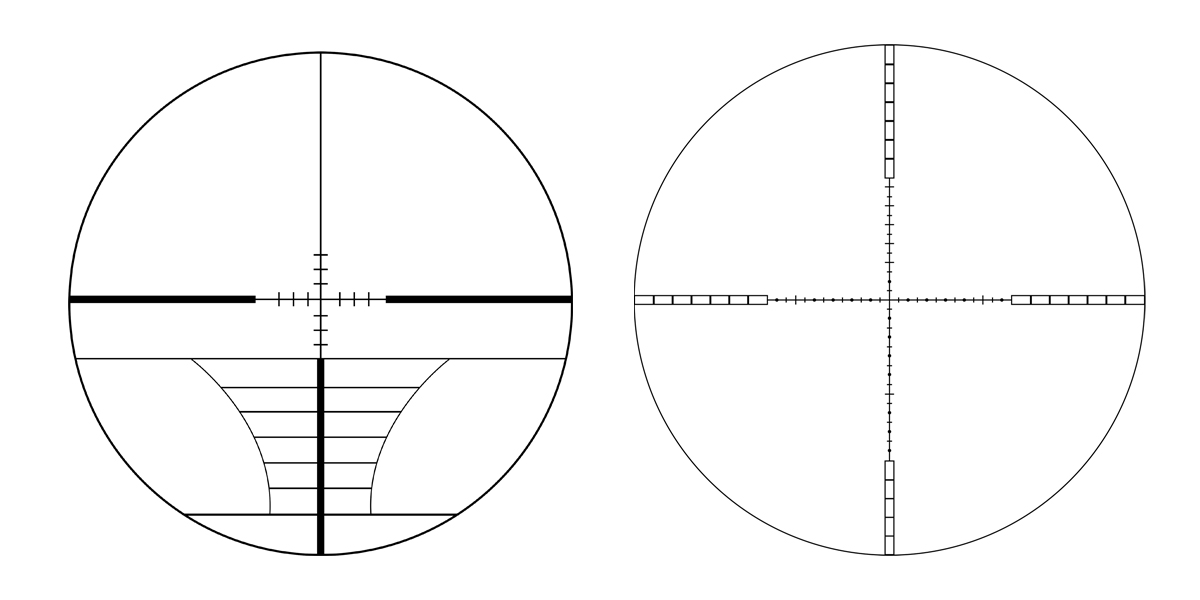
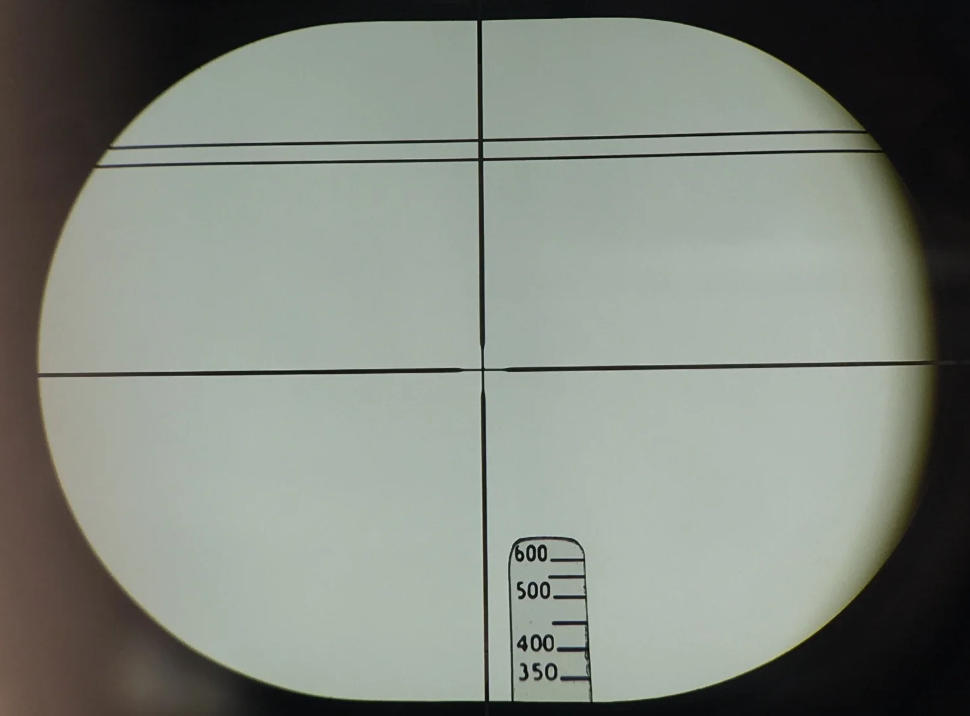
The earliest reticles were fixed with crossed metal wires, marking this period as the metal wire reticle era. All reticles needed to be fixed at five points: four corners and center connection. The initial reticle designs adhered to this principle, which is why they were also called crosshair reticles. This type of reticle lacked fine-tuning, which posed significant challenges for distance estimation and FFP (First Focal Plane) design.
When Nexroa Optics first established our scope manufacturing facility, we had to source metal wire reticles from overseas suppliers. However, in 1995, we began producing our own metal wire reticles. Today, some of our cost-effective SFP scopes still widely use metal wire reticles due to their competitive cost and stability, making them ideal for hunting-style SFP rifle scopes.
2. Crosshair Reticles
Printed Reticle Era: International: 1980s – 1990s | Nexroa Optics: 1995 – 2005
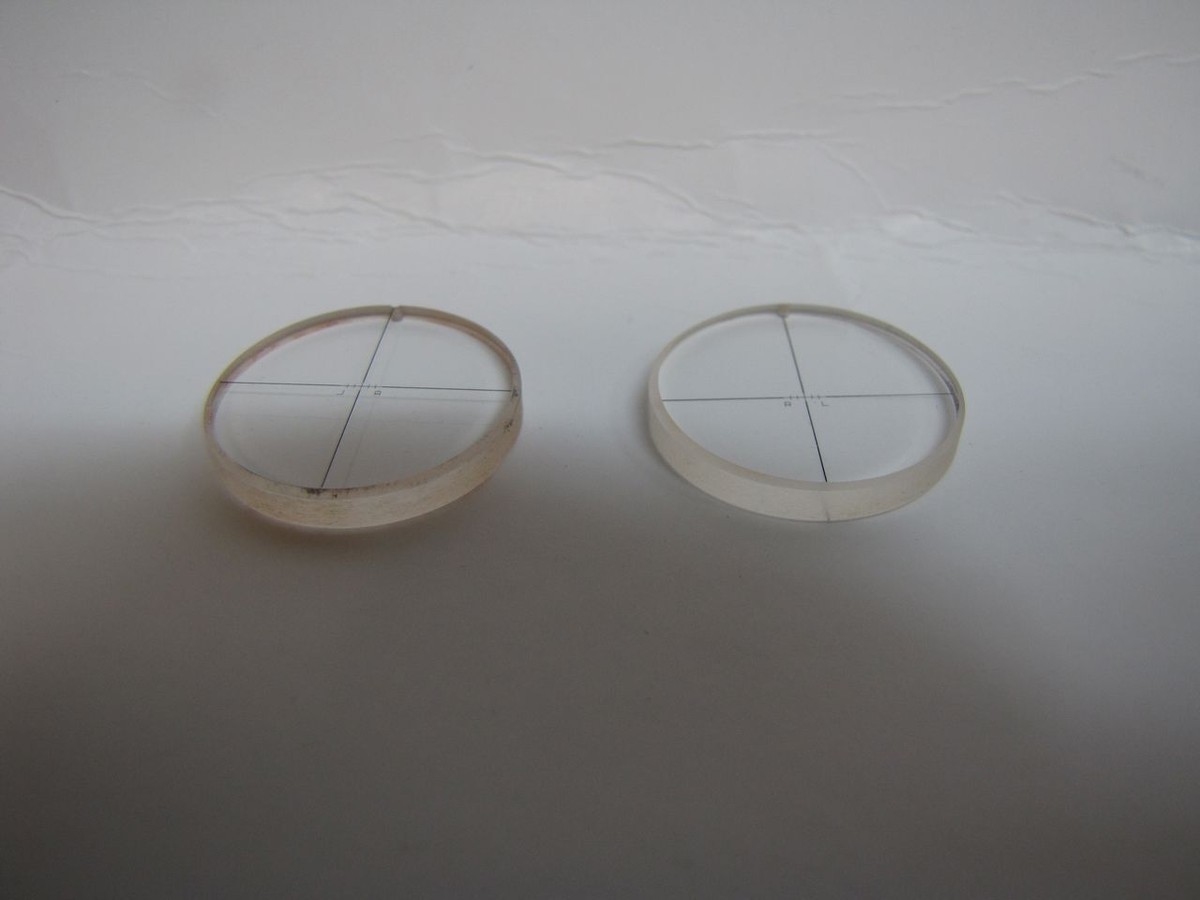
In 1980s, printed reticles began to be applied in the scope industry. The advent of printed glass reticles opened new possibilities for the scope industry. It broke away from the traditional limitation of five-point fixed reticle pattern, allowing arbitrary patterns to be printed on glass reticles. However, the downside of printed reticles is that they have low transmittance, and factors like glass flatness and alignment precision can affect the position and shape of image, impacting clarity and accuracy. Despite rapid developments in the glass industry, printed glass reticles were not applied to scopes until 1980s.
Nexroa Optics successfully began using printed glass reticles in rifle scopes and binoculars in 1995. However, within less than 10 years, with the rapid increase in domestic industrial capacity, we shifted to etched reticles.
3. Etched Reticle Era: International: 1990s – Present | Nexroa Optics: 2008 – Present
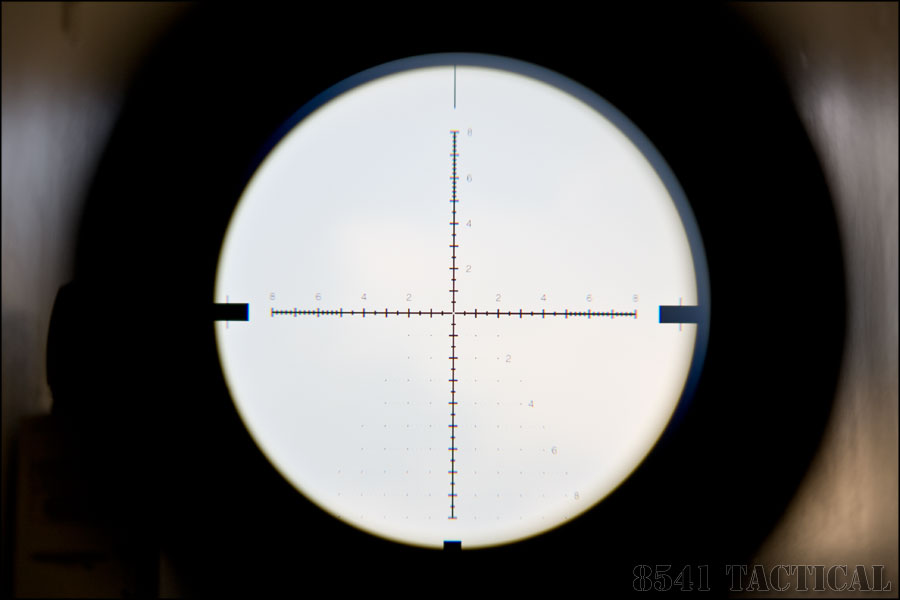
In 1990s, glass reticles evolved from printed designs to etched reticles, marking a significant upgrade. Etching involves multiple precise steps: chemically etching grooves, filling with black powder (usually black chromium), applying a luminous coating, bonding a protective plate, and cleaning. Each step must be carefully controlled, and this advancement was largely driven by the development of precision optical processing technology. As a result, etched reticle technology reached unprecedented levels of precision, durability, and contrast, paving the way for FFP (First Focal Plane) reticle designs.
Nexroa Optics began producing FFP rifle scopes in 2005, successfully manufacturing high-precision etched reticles with the guidance of international brand customers and the support of domestic technological advancements. This marked the beginning of Nexroa Optics developing high-magnification etched reticle rifle scopes.
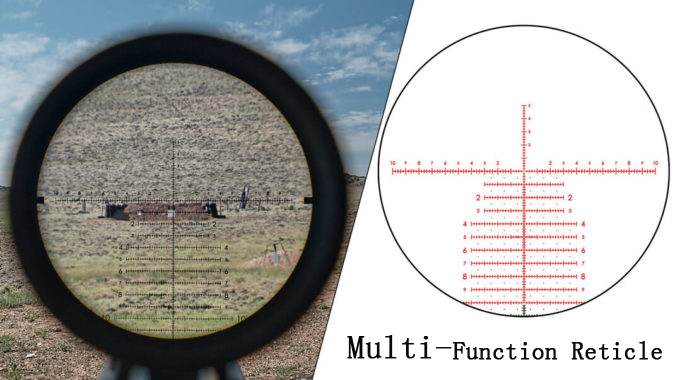
4. Multi-Function Reticle Era: International: 2000s – Present | Nexroa Optics: 2008 – Present
After 2000, miniaturization and energy-saving of LED lights made reticle illumination possible. This advancement allowed for precise aiming under different lighting conditions, driving the development of new aiming methods. We can even install red, green, and blue LED lights in compact spaces, enabling seamless color switching based on different backgrounds for faster aiming.
Nexroa Optics: Fiber Optic Reflection and Reticle Illumination Technology
In the past decade, quick aiming with multi-function and multi-scene switching has become the direction of rifle scope development. The rise of red dot sights also prompted Nexroa Optics engineers to consider applying single-point aiming to rifle scopes. Due to fundamental differences in optical principles, we obviously cannot directly apply the imaging technology of red dot sights or holographic sights to rifle scopes. Additionally, traditional LED illumination methods cannot provide a bright enough red dot.
Thus, the latest fiber optic reflection technology emerged. By using fiber optics, we can guide light to the center of the reticle with minimal light loss and fix it in place. Combined with precise 45° end-face grinding technology, this process is complex but effective. It allows us to create near-perfect, high-brightness red dots without glare. Furthermore, smaller red dots are crucial for minimizing target obstruction, and our current technology achieves a red dot with a diameter of 3 microns, whereas Zeiss offers a 2-micron red dot.
How is Reticle Illumination Achieved?
Why Does the Reticle Need Illumination?
The crosshair inside the rifle scope is a key component that provides a visual reference point for the shooter, helping them quickly lock onto the target. In low-light environments, such as dusk or night, or when aiming at dark bushes or leaves, the visibility of the reticle decreases, affecting shooting accuracy. Therefore, reticle illumination is crucial to ensure that the shooter can clearly see the aiming point under various lighting conditions and avoid missing the target.
Development History of Reticle Illumination Technology
Early Attempts
In the early development of scopes, some simple light source technologies were used, including small halogen bulbs and natural light introduced through a window at the top of the reticle. However, halogen lamps are large, generate heat, consume a lot of power, and have a short lifespan, making them unsuitable for long-term use.
LED Era
In 1994, Zeiss launched LED illuminated reticles, and Nexroa Optics has closely followed the development of LED technology since the founding of our factory. After 2005, with the miniaturization of LED technology in China and a decrease in costs, reticle illumination began to be widely adopted. This stage of illumination primarily relied on monochrome light sources, usually red or green, to enhance contrast under different lighting conditions.
Electronic-Controlled LED Era
With the continuous development of illumination technology, rifle scopes began adopting electronic control systems with adjustable brightness and multi-color illumination. Nexroa Optics leveraged China’s advantages in the electronics industry to design integrated circuits, enabling shooters to precisely adjust the LED brightness to suit different lighting conditions. Additionally, multi-color illumination gradually became achievable, allowing shooters to use different reticle colors for various shooting tasks, such as differentiating between target types or shooting conditions. This design has been especially popular in tactical scopes.
Fiber Optic Illumination Era
The success of Trijicon’s fiber optic illumination prompted Nexroa Optics to explore the potential of this technology. Fiber optic illumination offers even brightness and does not consume power, further improving reticle illumination performance. Fiber optics can evenly distribute ambient light across the reticle’s illuminated area and automatically adjust brightness based on external light conditions. This design eliminates the need for constant adjustments of the brightness knob during daytime use, making it ideal for switching between different lighting environments. Currently, Nexroa Optics’s fiber optic illumination technology is widely used in our own rifle scopes, prism scopes, and red dot sights.
Single-Fiber Reflection Technology
Both LED and fiber optic illumination methods involve using light sources to illuminate reflective materials, inevitably resulting in some brightness loss. Nexroa Optics engineers are currently testing a new technology that uses fiber optics to guide light to the center of the reticle with minimal loss and fix it in place. This is coupled with precise 45° end-face grinding technology (where the light from the fiber optic is directed vertically from the center of the reticle to the eye at a 45° angle, a complex but effective method). This approach achieves nearly perfect, glare-free, high-brightness red dots. The size of the red dot is determined by the thickness of the fiber optic, which can be extremely fine (we currently use 3 microns, while Zeiss uses 2 microns), crucial for minimizing target obstruction.
Through the evolution of halogen lamps, LEDs, electronic controls, and fiber optic technology, scope illumination has not only enhanced shooting accuracy and efficiency but also significantly improved a shooter’s performance in various environments. Nexroa Optics will continue to explore innovations in this field and offer more intelligent solutions.
This English version preserves the original meaning and tone of the content. Let me know if you’d like any further adjustments!
Nexroa Optics Reticle Classifications and Overview
Nexroa Optics offers the development of customized reticle designs tailored to your needs
Since its inception, there have been hundreds of reticle designs, and Nexroa Optics product designers have categorized them into three simple types based on experience. This classification helps new brand customers quickly select the reticle type they need.
A: Basic Reticle (Simple Reticle)
This type of reticle features a simple crosshair design without any ballistic compensation or range indicators. It can have uniform thickness with thicker edges and a thinner center, or it may feature a central aiming point, circular, or triangular symbols. It might also have discontinuous lines, all designed to highlight the center aiming point. A red marking indicates a design that can be illuminated independently. These types of reticles are generally easier to manufacture because they do not require the precise distance etching of a BDC (Ballistic Drop Compensation) reticle or the more complex design required for range-finding reticles. These reticles are commonly used in SFP (Second Focal Plane) designs and are typically made with wire reticles to reduce cost.
B: Ballistic Drop Compensation (BDC) Reticle
This type of reticle includes vertical dots or line scales, allowing for distance measurement without the need to adjust the ballistic compensation turret (i.e., no need to calculate and adjust click values). Special care must be taken during manufacturing to ensure the accuracy of each ballistic compensation point to avoid shooting errors, as any mistakes may cause the entire scope to lose its BDC function. Complex BDC reticles are typically used for long-range precision shooting, and their design and manufacturing are often paired with FFP (First Focal Plane) systems.
C: Range-Finding Reticle
This type of reticle is designed to help users determine the distance between the shooter and the target. The typical target is human-shaped, although some hunting-specific brands design reticles to measure different animals (e.g., wild boars). Many of these range-finding reticles have scales at the bottom of the reticle image. Some include horizontal lines of varying width and height below the crosshairs to estimate the distance of the target based on length or width. Range-finding reticles often come with BDC functionality. The following two examples are based on using a person’s width or height to estimate distance. As such, this type of reticle is commonly used by military and law enforcement customers.
This updated version reflects your brand, Nexroa Optics, as requested. Let me know if you need anything else!