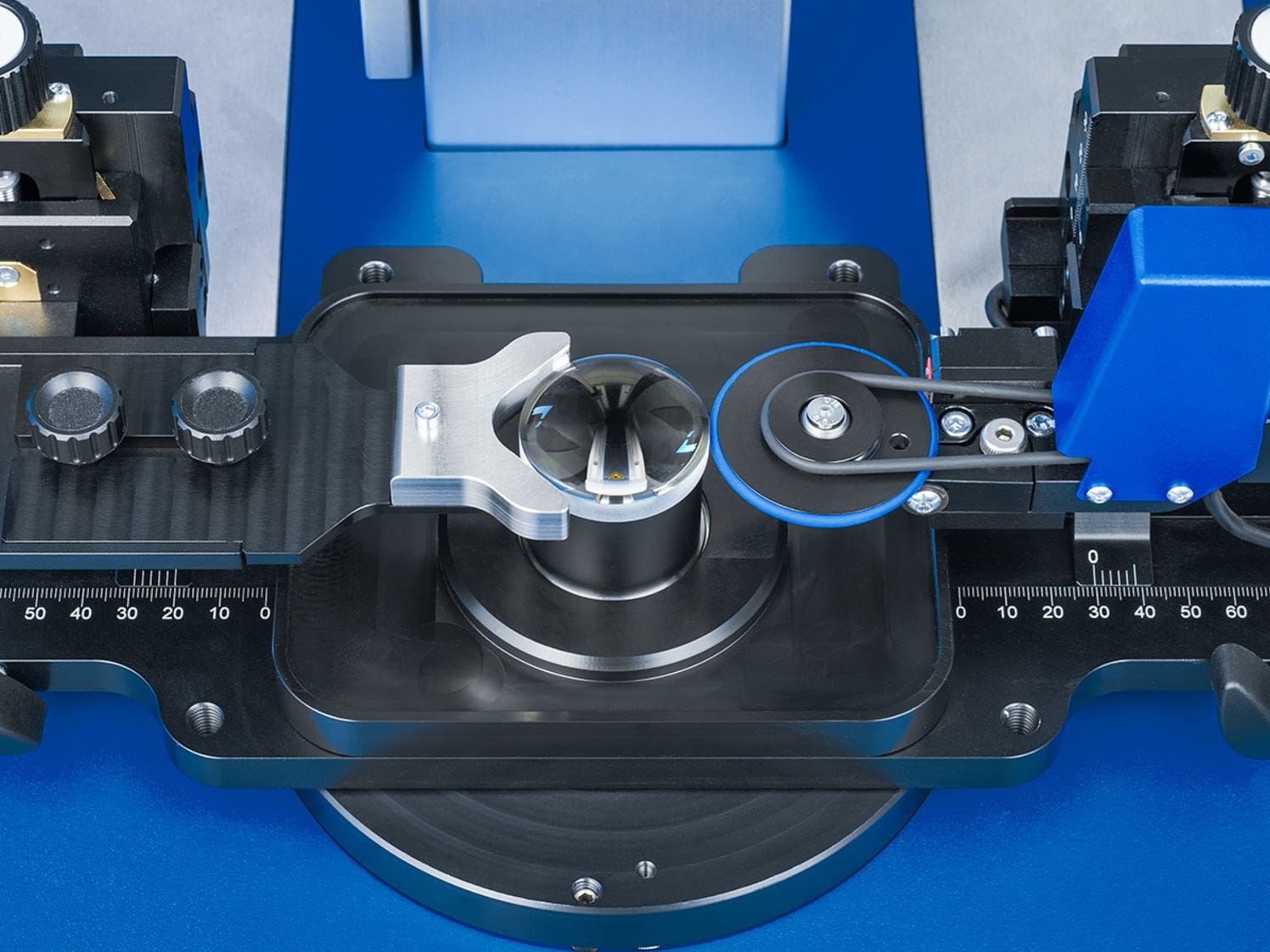
At Nexroa Optics, we adhere to strict standards to ensure each lens delivers outstanding optical quality and reliability. Below is our standard lens manufacturing process, carefully designed and optimized at each step, from raw materials to final product, to provide exceptional optical performance required for high-end rifle scopes and other optical devices.
1. Coarse Grinding
The lens production begins with the coarse grinding stage. We use coarse grinding tools to remove excess material from the lens blank and initially shape it into the desired spherical or aspherical shape. By using appropriate grinding equipment, we ensure the curvature of the lens closely matches the design specifications.
Checkpoints: Initial checks for curvature radius and surface quality to ensure the coarse-ground lens meets basic shape requirements.
2. Fine Grinding
During the fine grinding stage, we use fine grinding tools to further process the lens, reducing surface roughness and improving surface quality. This step is crucial for ensuring the lens reaches optical-grade precision.
Checkpoints: The surface roughness and thickness of the fine-ground lens must meet preset standards, preparing it for subsequent polishing.
3. Polishing
After fine grinding, the lens enters the polishing stage. High-precision polishing removes fine scratches from the lens surface to achieve the required optical smoothness.
Checkpoints: The lens must undergo thorough inspection after polishing to ensure it is free of scratches or micro-defects and meets optical polishing standards.
4. Cleaning
After each machining step, we perform ultrasonic cleaning or use specialized cleaning solutions to ensure the lens surface is free of any residue or contaminants. This step is critical to maintaining quality in subsequent processes.
Checkpoints: Ensure the lens is fully cleaned with no water spots or residues to guarantee the quality of the coating process.
5. Coating
To enhance the optical performance, we apply anti-reflection or protective coatings to the lens surface. These coatings help reduce reflections and increase transmittance, thus improving overall optical performance.
Checkpoints: Check for uniformity of the coatings, as well as reflection and transmission rates, ensuring each coating layer meets design specifications.
6. Centering
After coating, the lens undergoes centering to ensure the optical axis is aligned with the mechanical center. Precision machinery adjusts the lens position to optimize its optical performance.
Checkpoints: Check the deviation between the optical axis and mechanical center to ensure lens centering meets design standards.
7. Bonding
For multi-lens assemblies, Nexroa Optics uses optical adhesive to precisely bond different lens elements together. The bonding process requires stable humidity and temperature conditions to ensure bonding quality.
Checkpoints: Check for bubbles at the bonding interface to ensure the integrity of the optical performance.
8. Edge Coating
The edges of the lens are coated (e.g., using India ink) to reduce stray light interference with the optical system, further enhancing imaging performance.
Checkpoints: Ensure uniform edge coating without peeling, guaranteeing the lens’ anti-scatter performance meets expected results.
9. Final Inspection
In the final inspection phase, we perform comprehensive optical and mechanical testing on each lens. Using precise equipment such as interferometers, we ensure each lens meets customer specifications.
Checkpoints: Inspect the lens’ optical performance, including transmittance, reflection, and centration, ensuring the final product meets all design and customer requirements.
10. Lens Assembly
Once all quality control steps are completed, the lens enters the assembly phase. At this stage, the lens is precisely installed into the rifle scope or other optical devices, ensuring the final product delivers excellent optical performance and structure.