

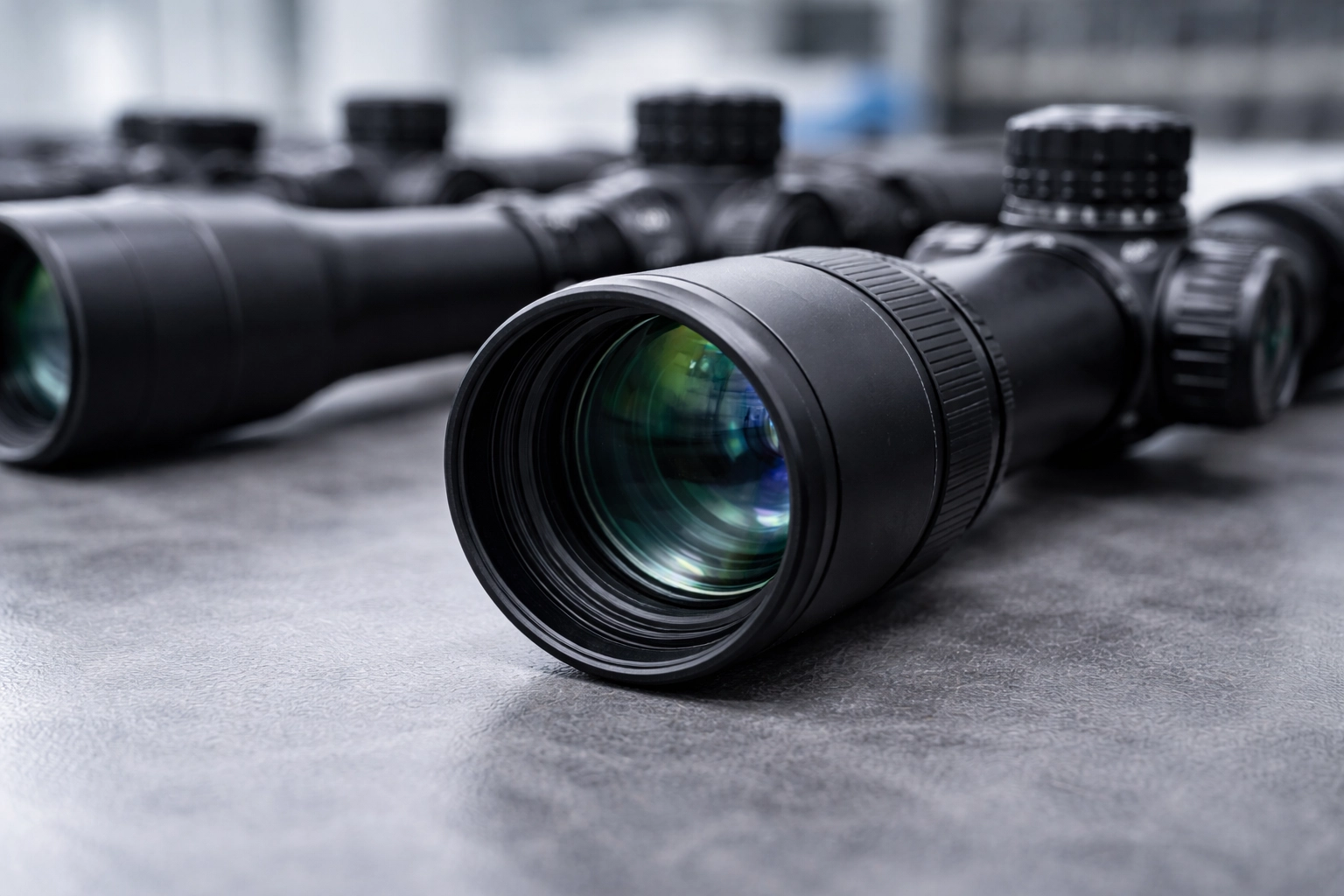
In shooting, hunting, or outdoor observation, the reliability of a riflescope directly affects both performance and user experience.
A truly reliable scope is not determined solely by magnification or design; it is the result of a combination of optical systems, mechanical structure, and manufacturing details.
This article highlights several key aspects to help you objectively assess the real quality of a riflescope.
Optical System: The Heart of a Riflescope
The optical system determines image quality and is the main factor separating ordinary scopes from high-quality ones.
A reliable riflescope typically features:
- High-precision lens grinding with stable edge clarity
- Thoughtful optical design to minimize distortion and aberrations
- Multi-layer lens coatings for improved light transmission and contrast
- Clear imaging even in low-light conditions
It’s important to note that simply labeling a scope as “high definition” does not guarantee performance. True quality depends on lens material, polishing, and coating consistency.

Parallax Adjustment and Precision Matter
Parallax is a common issue in low-quality scopes.
Reliable riflescopes undergo strict parallax calibration before leaving the factory to ensure the aiming point remains consistent at different distances and viewing angles.
The precision of adjustment systems is equally important:
- Are the adjustment marks clear, and does the scope return accurately?
- Is the dial resistance smooth and consistent?
- Can it maintain repeatable accuracy after multiple adjustments?
These details often determine the scope’s stability in real-world use.
Mechanical Structure and Assembly Determine Durability
Besides optics, the mechanical structure is critical.
A dependable scope should have:
- A sturdy tube and stable internal supports
- Precise assembly to prevent internal looseness
- Effective shockproof, waterproof, and fog-proof performance
During manufacturing, standardized assembly and experienced technicians directly impact product consistency.
Quality Control Is More Important Than Specs
Professional scope manufacturers focus on process control, not just final specifications.
A complete quality control system usually includes:
- Incoming lens inspection and cleaning standards
- Multiple inspection points during assembly
- Optical, mechanical, and appearance tests on finished products
- A combination of sampling and full inspection strategies
Although these processes are not always visible to users, they form the foundation of reliability.

After-Sales Service Reflects Brand Responsibility
Scopes are long-term precision optical instruments, so after-sales support is also a part of reliability.
A trustworthy brand or manufacturer usually offers:
- Clear and reliable warranty policies
- Professional technical support and repair services
- Quick response mechanisms for quality issues
This shows responsibility for the product and respect for the user experience.
Conclusion
Determining whether a riflescope is truly reliable requires more than looking at specs or price. Consider the optical system, adjustment precision, mechanical structure, and manufacturing and after-sales systems together.
A stable and dependable scope comes from years of engineering experience and rigorous production processes.
At NEXROA, we believe a reliable riflescope is not about “stacking specs,” but about meticulous attention to detail from optical design to final inspection.